Archive for the ‘Uncategorized’ Category.

Preschooler Wisdom

The scene: Ben and his good buddy M, playing trains on the floor, Eli roaming around in their midst. They are pretty quiet, occasionally speaking without stopping the game or looking at each other.

Background information: Eli calls himself “Li-li.”

The dialogue, in matter-of-fact tones:

M: “Eli’s crazy, isn’t he?”

Ben: “Yeah, he really is.”

M: “I mean, ‘Li-Li-Li-Li-Li-Li-Li,’ all day long.”

Ben: “Yeah.”

And when you put it like that, who’s to argue?

Mama at the Movies: The Motherhood Manifesto

What does The Motherhood Manifesto have to do with baking bread? Here’s a taste from this month’s column:

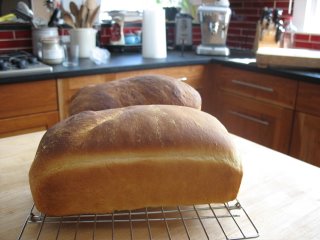
When I was a little girl, I’d stand in the kitchen at my mom’s side, “helping” her make bread every Saturday. She’d measure warm water, yeast and honey into a big yellow bowl, then a few minutes later stir in a bit of salt and several scoops of flour. She’d give the mixture a few brisk strokes with a wooden spoon and then, as the dough held together, turn it out on to the table to knead. This was the part I loved. Dusting our hands with a bit of flour, we’d push and fold the dough until it was smooth and satiny. A couple hours’ rising, a bit more kneading, an hour in the oven and then: fresh bread for the family to eat.

Bread making, like childrearing, isn’t particularly complicated. The ingredients are cheap, the process is simple. But they both require time and attention. Childrearing of course wants very focused time and attention; it can’t be squeezed into intervals of free time like bread making. So when my mom went back to work full-time, when I was old enough to spend the full day in school, bread making fell by the wayside, replaced by breadwinning. Her forty hours outside our home didn’t allow the time at home for both bread making and childrearing; she had to make a choice (and I like the choice she made!).

But we really shouldn’t have to make that choice. There should be time for childrearing, breadwinning, bread making, and whatever else a mother wants to do. This is the radical claim of The Motherhood Manifesto.

Read the rest of the column over at Literary Mama, and then sign up at MomsRising to stop discrimination against mothers and help build a more family-friendly country.

Valentine’s Day Ding-a-lings

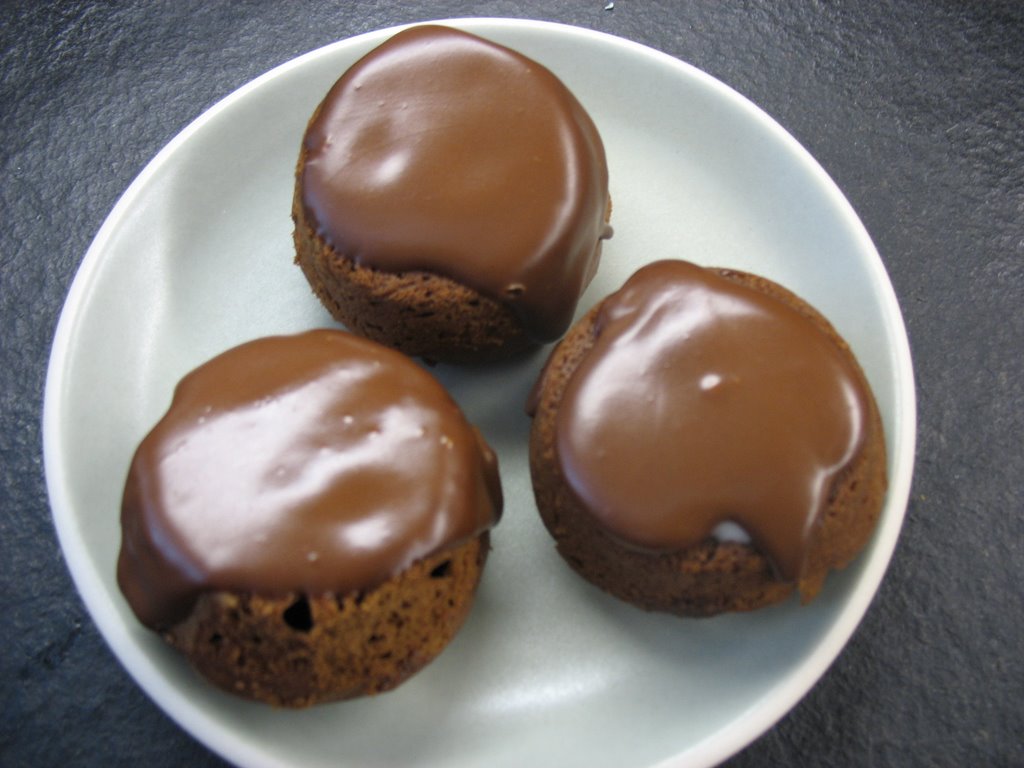
No, this is not a list of annoying people who insulted me today, as happened one Valentine’s Day… Just a picture of the little cakes I wound up making for my boys.

I’d been stymied by the whole insert-cream-into-cake portion of the recipe; my vanilla cream was way too runny to do anything but pour out of a pastry bag (which I don’t have any way) or my ghetto pastry bag, a ziploc with the corner cut off. But then I had an inspiration while I was out running today, and came home to wash out Eli’s little medicine plunger. It worked like a charm! Plus, it was just kind of fun to squirt vanilla filling into chocolate cake with a plastic syringe.

Oh, and with the cream inside and the ganache on top, they’re really not too dry at all. Pretty tasty, in fact.

The Camel Bookmobile


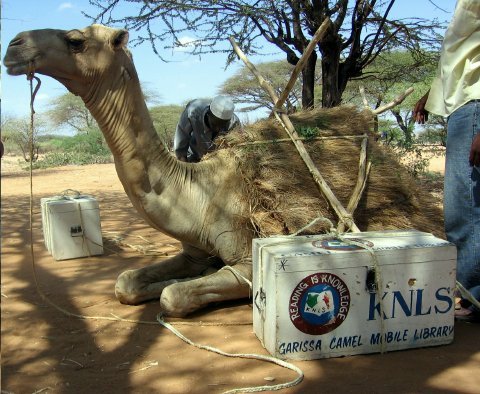
First, just say it a few times: The Camel Bookmobile. The Camel Bookmobile. The Camel Bookmobile.

You’re smiling now, right? You don’t even know exactly what it is, but it can only be exactly what it says, and no matter what the details, it seems like a great idea.

The Camel Bookmobile!

It is a great idea!

And it needs our support.

Click on over here or here to find out more and donate books or the money to buy them.

And while you’re at it, check out the novel of the same name, The Camel Bookmobile, by the wonderful Masha Hamilton.

Four Valentine’s Days

Kindergarten: I came home for lunch and my mom mysteriously sent me up to my bedroom to await my meal. Moments later she arrived with cream cheese and jelly sandwiches on white bread (white bread! unheard of!), cut into hearts.

2002: I’m a month from my due date with Ben (but as it turned out, only 2 weeks from Ben), standing in the grocery store’s freezer aisle, trying to choose a vanilla ice cream for the brownie ice cream sandwiches I’m making for Tony. A woman walking by looks me up and down and says snarkily, “It’s a little late to be counting calories, isn’t it?” Cow.

2006: My Valentine’s Day dessert does double duty for the Birthday Cake Blog Project I organized to celebrate my sister‘s 45th. It tastes as good as it looks. (But sorry, Libby, I’m not nearly so organized this year!)

2007: This recipe looked so promising, but to be honest, the cake’s a bit too dry, the filling a bit too runny (and why, when a recipe isn’t so great, does it make so much? why??). Still, I will coat them all with ganache, they’ll taste fine, and there’s plenty to share with the preschool staff. Meanwhile, the banner I made (with the hearts Ben cut out to make his valentines) looks just fine. Apparently this year, it’s more of an arts & crafts holiday for me.

Book Club Works

Literary Mama contributor Cindy Dyson has just launched Book Club Works, a grassroots, adoption-style program that matches the thousands of book clubs across the country with the thousands of literacy teachers, activists and volunteers in order to bring the transforming power of books to the people who need it most.

For literacy workers Book Club Works means a steady supply of free, great books. It
means knowing a group of readers cares about his or her work. Just a few of the lit-
workers who will benefit:

  • tribal teachers
  • disaster relief workers
  • homeless shelters
  • battered women’s shelters
  • detention centers
  • prisons
  • inner city programs

For book clubs, BCW means having a way to share their love for and knowledge of
books beyond their current circle of influence.

Because BCW simply provides a place for book clubs and literacy workers to find each
other, there are no programs or rules. No bureaucracy to slow down the process of
getting books to the people who need them most. Simply one book club adopting one
teacher or literacy worker and meeting that teacher’s book needs.

Book Club Works has just launched and is eager for literacy workers and book clubs to
join before taking the program nationwide. Check out the website and sign up your book club now!

A Trip to the Ballet

The last time I went to the ballet, I was probably about ten. My mom took me to a New York City Ballet production of Petrouchka, and I don’t remember much about the event except wondering what made the ballerina’s cheeks so red!

We’re really kind of film/music people around here… I think dance is beautiful, and I’m always knocked out by the graceful strength of the dancers, but I’ve never seen many performances, or learned very much about it. Meanwhile, Ben’s interest in music started young and shows no sign of abating. He’s got a bin full of instruments, as well as two guitars, a ukulele, and a mandolin. He studies the fabulous San Francisco symphony kid’s website. And of course, we read books about music all the time, from Animal Orchestra, to Meet the Orchestra, to The Philharmonic Gets Dressed to Zin! Zin! Zin! A Violin. He even has a 4,000 entry illustrated encyclopedia of music that Tony found at the used book store (Ben reads it in bed).

And yet, we still haven’t been to the symphony! But we recently tagged along with a friend who’d bought a block of tickets to the San Francisco Ballet’s special kid-focussed production of Stravinsky’s The Firebird. We got to watch students from the Ballet School warm up on stage while a retired dancer narrated their every movement; we got to watch an excerpt from the vivacious dance, Blue Rose; and finally, a full production of their world premiere Firebird.

Of course, Ben and I had done our homework. I’d found a picture book version of The Firebird, and we’d been reading it nightly for a week. I’d worried that maybe the story, with its demons and deathless king, would trouble Ben’s dreams, but he seemed unfazed.

We arrived early, in time to really study the beautiful performance space. We walked down to look at the orchestra pit, to note which instruments were already in place (piano, harp, drums), and we got to say hello to the trumpeter when he walked in to put his score on his music stand.
Then the lights flickered, we took our seats, and Ben and his friends watched rapt as the dancers moved through their warm-ups, then Ben leaned back and let Blue Rose wash over him.

When The Firebird began at last, I suddenly realized that Ben has never seen a live-action performance of any kind. The few movies he has seen are animated; he has never seen real people pretending to be characters. And he didn’t know quite what to make of it. He moved on to my lap, a little worried about Prince Ivan when Kashchei captured him. “Is that man real? Is he going to be ok?” And he still hasn’t stopped talking about the scene of Kashchei’s death, which I found beautifully, subtly staged (a flashing light and a brief black-out), but frightened poor Ben speechless. “He’s ok,” I kept whispering into his ear, “It’s just a story. It’s all pretend.”

He’s still at the stage where the line between real life and pretend is a little fuzzy, and it’s an interesting stage to witness. I want him to know and appreciate the difference between real life and stories, of course, but I also — almost even more — want him to be so moved by stories that they feel real. I think I’ll be a little sad when pretend doesn’t have the power it does now.

About What Was Lost

I live in a bubble. It shimmers in the sun and casts pale rainbows on everything I see: my husband, my two sturdy boys, our life together. Most days, I carry on as if the bubble’s not so fragile, but of course every once in a while, something I read or something I see will remind me that this is a very delicate state in which to live. It’s not, in fact, real. I can’t close myself off from the sadness of the world with walls of soap, because if I did, I’d be closing myself off to some real joy, too.

I was reminded of this reading the new anthology edited by Literary Mama columnist Jessica Berger Gross, About What Was Lost: Twenty Writers on Miscarriage, Healing, and Hope. When I mentioned to a friend that I was reviewing the book, she asked, “Why? Why would you choose to read something so sad?” Why, indeed? I’ve never been touched closely by miscarriage, why sign up to read about an experience I’ve managed, so far, to skirt?

Because I didn’t expect that the book would be only and irrevocably sad (and it is not). Because I expected to find in the book some beautiful, deeply-felt writing (and I did). Because miscarriage is hushed-up—although twenty to twenty-five percent of pregnancies end in miscarriage, did you know that? (I didn’t)– and I wanted to do some small thing to speak up about miscarriage. Because miscarriage is something that happens to women and families, and they grieve, and then learn how to carry their grief along as they move on in life. I wanted to read about that.

I read about the secrecy in which we shroud miscarriage, still, even though we know it happens so often. David Scott writes ruefully, “The world of miscarriage was a secret society we’d joined by accident, by living.” Emily Bazelon takes some small comfort in this, that this unwanted experience has moved her into a quiet community: “As I unraveled—there was a long time when I didn’t think about anything else—I held on to the idea that I was joining a sad but wise tribe.”

I read about the physical pain of miscarriage, its terrible perversion of labor. Jessica Jernigan’s doctor tells her that miscarrying will feel like bad menstrual cramps (which by now we should all know is a lame euphemism for tearing agony); instead, she writes, “It was much worse, and each time the pain came, I felt the urge to push, and this travesty of labor was worse than any physical hurt…. The doctor had also told me that I wouldn’t recognize anything resembling a baby. He wasn’t quite right about that, either…I recognized the gestational sac when I saw it…I held it in the palm of my hand. It was small and round and dark, like a plum.”

I read good ideas for helping women and their families endure miscarriage. Joyce Maynard reminds us to just, please, take it seriously. “However it occurs, under whatever circumstances…it is a death, and nothing less. It leaves you one child short, once again.” Dahlia Lithwick recalls the end of her pregnancy in the hospital’s labor ward, and comments bitterly, “I’d have preferred to have that surgery in a hospital broom closet or the damned parking lot. In hindsight, it’s unbelievable that any modern American hospital would not have a soothing, non-ironic place to minister to the thousands of pregnancies that end as mine did.” And so she suggests simply “that hospitals, which thoughtfully offer massages and hot tubs and music for the new mommies, could also provide spaces—both physical and psychological—for the almost-mommies as well.”

I read about the aftermath of loss, and the need to carry on for one’s family, as in Sylvia Brownrigg’s wrenching story of a trip to Lake Tahoe to memorialize her son Linnaeus: “As with so much of our experience with Linnaeus, my husband Sedge and I were accompanied by our son, Samuel, not yet two, and my stepson, Henry, seven. There was a certain need to keep up appearances… It’s a funny kind of family vacation, a trip that’s part fun and frolics in the snow, part ash-scattering.”

And I read about moving on. Susan O’Doherty’s “The Road Home” concludes the collection with her intertwined stories of becoming a mother after many losses and resuming a writing career. After reading to her son’s class, she writes, “A serious-looking girl raises her hand. You’re a mother, and you’re a writer,” she says.
I wait for her question, but there doesn’t seem to be one.
“That’s right,” I say.
She nods. “That’s good.”
I nod, too. “Yes,” I say. “It is.”

Thank goodness for all of these writers, sharing their stories and offering understanding sympathy to people grieving miscarriage. They map out a sad terrain, but suggest, too, some routes toward hope.

Solitaire

This month in Literary Reflections, Amy Mercer remembers how she loved solitude as a child, and describes how she longs for it now as a mother and writer:

But now, married for almost ten years and the mother of two children, I fear I’ll never be alone again. I check email with a child on my lap. I cook dinner with a boy on the ladder next to me, making “salt and pepper make-up” (water, flour, salt and pepper) in a mixing bowl. I shower with my two year old, shampooing with one hand. I carry a boy on each hip to bed, where we read, cuddle, get more “choco” (chocolate milk), and when I tuck them in for the third time, I’m weary of others. Collapsing onto the couch with a magazine or a book, I read someone else’s story. I am alone at last for as long as I can stay awake.

Someone else’s story reminds me of my own. Alone with my children, I banish them to their playroom, so I can write. I let them play computer games for too long, so I can write. I buy them new DVD’s, so I can write. Will asks for a snack while I struggle for the right word, and Miles pulls on my arm as I type. Alone in motherhood; in the hours of laundry and cleaning and cooking and telling everybody else what to do, I am connected to the rest of the world when I write. With Play-Doh spread across the table, Will cutting and Miles eating, I write about trying to relax. As they eat dinner at the kitchen counter, I write about the McDonald’s commercials, and my struggle to keep our family healthy. While the boys take a bath, splashing water across our new tile floor, I write about my definition of home. After I read them books, I sneak out of their room, and if I’m not too tired, I write about giving birth to readers.

Read more about how Amy Mercer plays Solitaire.

Snapshot

Sunday morning, early, everyone still in pj’s. Mary J. Blige on the stereo, Ben doing laps around the kitchen, strumming along on the mandolin, Eli sitting and coloring at the table, Tony making a cappucino and I’m on the couch with the newspaper.

A nice way to start the day.