I’m a Hip Mama, now
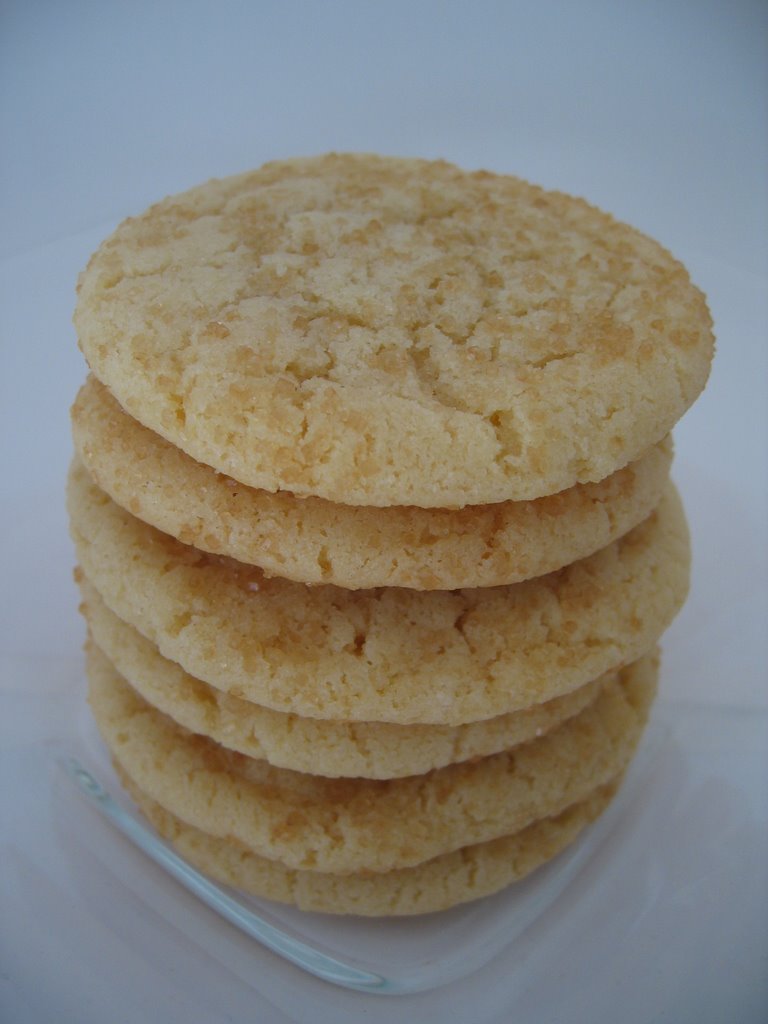
Check out my little essay, The Cookie, at the fabulous Hip Mama!

Check out my little essay, The Cookie, at the fabulous Hip Mama!
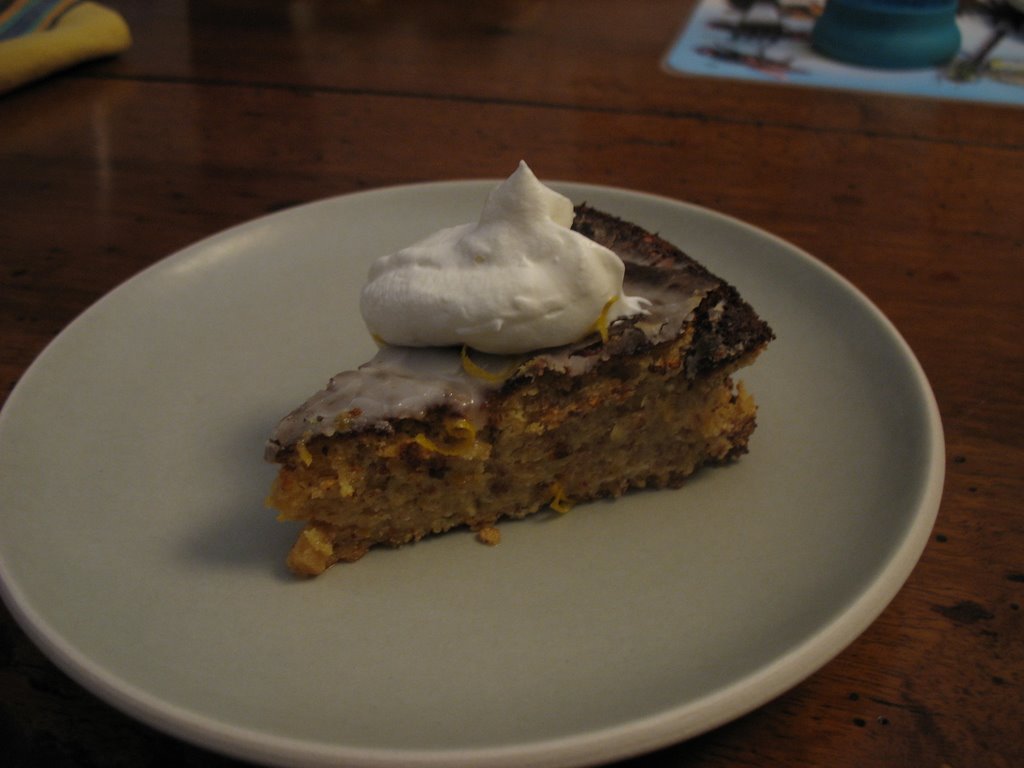 I keep experimenting with recipes that use whole lemons (peel, pith and all) and having made this twice now (once for my parents, once for my sister and her family, so both times for excellent baking critics!) I think this Meyer Lemon Cake is a winner. You boil the lemons (regular ones or the milder Meyer variety) for thirty minutes or so and then seed and puree them so that you don’t have any big chunks of peel, just lots of intense lemon flavor in a moist cake which uses ground almonds in place of most of the flour.
Try it and let me know what you think!
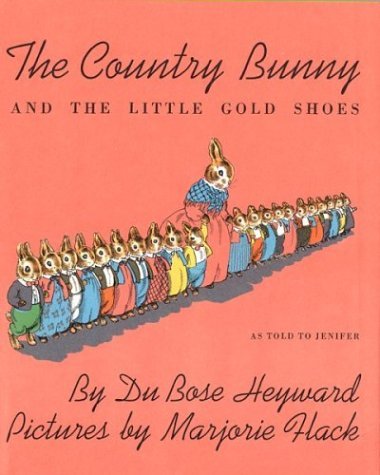 The Easter Bunny brings books to our house along with chocolate, and this year I got a sweet Margaret Wise Brown story, Home for a Bunny, for Eli and then finally remembered to get one of my childhood favorites for Ben, The Country Bunny and the Little Gold Shoes.
When I was little, I enjoyed the behind-the-scenes Easter egg logistics that this book details: the “fact” that there are five Easter bunnies; how bunnies are chosen to become Easter bunnies; the palace stacked with Easter eggs, carefully sorted by color, style, and flavor.
As an adult, and as a parent, I appreciate the feminist message in this seventy year-old story. The Country Bunny is told that she’ll never be an Easter bunny because her 21 children take up so much her time. And it’s true, she says, that as babies they do keep her completely occupied. But then they grow, and she teaches them to run the house, assigning pairs to cook and clean and garden and even to dance and paint, to entertain the bunnies doing more “necessary” chores. We’re shown, in fact, that mothering gives her skills that make her more qualified to become an Easter bunny than she might have been otherwise.
All of this is very gently conveyed, not at all beating the reader over the head with its message, for which I am grateful. But the thing that gets me is, why does the Country Bunny need to teach her kids to do all this work? She has a husband, we read (he’s never shown), which is how she comes to have 21 baby bunnies, but then he falls out of the story and the Country Bunny is effectively a single mother. And so good for her for managing as competently as she does. But of course I wish for a story that shows the daddy bunny staying home with the kids while mother bunny follows her career dreams.
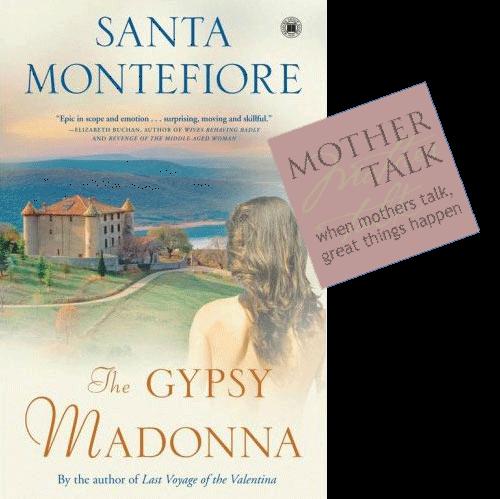 I’m delighted to be hosting another MotherTalk at my home on April 22nd, this time with bestselling British writer Santa Montefiore, author of The Gypsy Madonna.
Elegant Anouk, a dealer in American antiques, dies leaving the Metropolitan museum an uncatalogued, multi-million dollar painting by Titian. Her son, Mischa, never even knew she owned it. This mystery sends him on the trail of his own history, back to that French village of his childhood. He expects to uncover the origins of the Gypsy Madonna; he never expects to find himself.
If you’ll be in the San Francisco bay area on the 22nd, and want to join us for a reading, conversation, and good food & drink, leave your email address in the comments box and I’ll send you the invitation!
This month’s Literary Reflections essay first came to me as a submission for the book I’m co-editing, Mama, Ph.D. I was torn when I read the essay: the writing knocked me out, but it didn’t particularly address the writer’s academic career. Happily, Julia co-wrote another essay for the book, and I got to use this for Literary Reflections. Here’s a long blurb:
When people asked me when I planned to get pregnant, I used to say, “After my first book.” I’d chosen to put my energies elsewhere, and I figured publication was such a long shot that I’d have plenty of time to live and write in peace. When a book came and a few people remembered that promise, I had to think fast. “After a second book,” I replied, ridiculous. I know Harriet Beecher Stowe wrote Uncle Tom’s Cabin at the kitchen table after her children were tucked in bed, and I imagine that people learn much about life as their children grow. Somehow, though, I still carry the old notion that negotiation is impossible, that a woman must be completely given over to one or another kind of work, and that if her attention ever wavers, terrible things happen.
This message comes from as far back as my first memory, which is little more than a few frozen images. I’m three years old, out behind a farmhouse in Turbotville, Pennsylvania, under a fir tree. The boughs are so thick that the grass is stunted, and long cones like corn cobs clutter the ground. Wandering between them, I see my oxblood, buckle shoes with little cut-out daisies on the toes. I don’t know what I’m doing out here after supper; my dad and older brother are elsewhere; Mom is at work. As I wander toward the place where the lawn drops down a steep bank to the road, I see fields and the next farm’s corn crib on the other side. Something over there rustles the tall grass: Sally Ann, my cat, stalking a field mouse? Suddenly she darts down the bank and, without looking, without thinking, I dash toward her.
Then I see the rounded front of a 1950s sedan, hear a loud screech, and see sky, although I cannot say in what order. Mostly I recall the sky and one red shoe flying against it for a long, long breath.
My eyes open. Stretched out on the grass beneath the branches, I see my father’s face, feel him touch my cheek, my shoulder, “Jules, Jules…” He is more distressed than I have ever seen him. Is he angry with me for crossing the road alone or for losing my shoe? Another strange man stands nearby; later I will learn that he is rushing to the hospital, where his wife is giving birth. The man and my father say “Geisinger” and “ambulance,” but I know I am fine. At the emergency room, I obey the white-coated men who ask me to follow their fingers with my eyes, and I hold still while they take X-rays, but all the while I know it is pointless. I can’t understand why the adults keep saying I am such a brave girl. What this first memory means, I now believe, is that even though enormous things may hit me sometimes, I’ll be OK in the end, and mercifully I’ve always known this in some small, strange way.
But when my mother tells this story, she starts by saying, “The first night I went back to nursing…” For her, it is a story about neglect and what happens when a mother isn’t there to watch her children.
Read the rest of “Fine: On Maternity and Mortality” here at Literary Mama.
 Olive Woo Murphy
It’s been over a year since we moved back home after a year-long renovation, over a year since we brought back all the furniture (ours and lots of my late mother-in-law’s), all the boxes of clothing and books.
But I wouldn’t say we are quite unpacked, yet. The clothes come out of boxes on an as-needed basis (and so I missed a whole slew of 18-24 month clothes for Eli, which I unearthed only after he was too big), and the books are mostly still packed up, awaiting new homes in to-be-built bookshelves.
Meanwhile, new things come into the house and gradually the garage has filled with boxes.
Last night, having spent the day working at my desk, but with a lot of energy still, I ventured into the garage to knock back the piles. We’d planned to use some of them for Ben’s birthday party, by letting the kids build cardboard rockets and trains, but the building project became an art project at the last minute, and we wound up only using one or two boxes.
In an hour last night, I broke down over 50, and I’m still not done. Anyone need some boxes?

I am not a crafty person.
My mother can sew (and hammer a nail, and wire a dollhouse for lights, and perform various other handy tasks), my sister can knit and crochet, all of us can cook, but I don’t think any of us would identify as arts and crafts types.
Still, when I got a recent email from MomsRising announcing their new “Power of ONEsie” campaign, I couldn’t resist. Read on:
Imagine a beautifully presented long chain of decorated baby onesies stretching all around the state capital as a visual representation of the real people who need the policies being debated inside the imposing buildings. Each onesie signifies one person–mother, father, child, grandmother, grandfather, aunt, uncle, or other–who cares deeply about building a family-friendly America, but can’t take the time off work, or away from kids, to actually be at the capital. You.
What an image! Usually, I get an email like this, think “Great idea!” and never get around to doing anything about it. But on Friday, I read the email, dug through the closet for an outgrown onesie that said “Sprout” on it, penned “Moms’ Rights” on the two green leaves, and got it into the mail. Not really so very crafty, but not bad for me. MomsRising allows offers the non-crafty option, for those of you who’d like to participate but don’t have the time (or onesies); you can buy a onesie for MomsRising to add to the chain for you.
The Power of ONEsie. Coming soon to state capital near you.
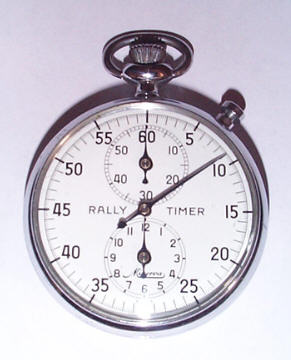
A disclaimer: I’ve never been to a speed dating event. By the time I was leaving school and the prospect of having to look outside the classroom for a date presented itself, I was saved by a friend who fixed me up with Tony. End of story.
But I’ve heard about speed dating, where a large room’s set with many tables, a potential partner seated at each. An MC holds a timer, and you hop from table to table, talking to the occupant for a short time, until the timer goes off. You move on, and at the end of the event submit a request for phone numbers from the tables where you spent a nice 5 minutes.
Or so I hear.
I got a taste of this the other night, at a mixer for faculty and students at my new summer job, advising MFA students. I am looking forward to the work (my first paid work since Ben was born!); it seems the ideal kind of teaching, working closely with one student while s/he writes a thesis.
But how to match students with their summer advisors? In the past, the department chair did it, knowing her students and faculty well, balancing her talents for teaching and match-making in an elaborate calculus. This year, with a bigger group of summer advisors, she decided to let us play a more active role. The advisors were all required to submit profiles and pictures ahead of time, for the students to review. Some of the students were clutching these sheets as they roamed the room at the mixer. They were wearing name tags that identified their chosen genres: Non; Short; Long; Poetry. It took me some time to figure it out (Non, for Nonfiction: hey, that’s me! Short and Long for the fiction writers; apparently the poets just write poetry, no need to identify by form or length), and I spent the first half hour moving from group to group, trying to find my people. Eventually I found a small cadre of Nons and sat down to talk: a 3rd grade teacher writing essays about her work; a woman writing about her nephew’s traumatic brain injury; a stay-at-home mom writing a memoir. Maybe one of them will choose me? I’ll have to wait and see if anyone asked for my number.

School assignment letters went out from the SFUSD last week, as did letters to private school applicants. We’d listed our seven public schools, applied to five privates (fewer than the seven recommended by some preschool directors), and were curious (ok, ok, anxious) to see what the mail would bring.
The SFUSD assigned us our third choice school (not, I should correct, the plastic-fish-beating school, which on review was actually our 5th choice). We should feel lucky; the SFUSD proudly claims that 90% of families are assigned to a school on their list, but in my informal survey of preschool families, it’s more like 45% get their first choice, 45% are assigned a school that’s not on their list (let alone in their neighborhood) and the rest of us wind up in the murky middle, assigned to a school we’re not thrilled about, that’s far from home, but which we put on the list to fill out our required seven.
As for the private schools, we received one acceptance, at our last choice, Tony’s alma mater, an all-boys school about which we have mixed feelings, and four offers to be placed in the “waiting pool,” the deliberately phrased non-waiting list from which random children are happily plucked to take the spots of families who have rejected acceptance offers. So if the straight white parents of a boy from an average middle class family turn down admission to our first choice school, maybe Ben will get that spot. Or maybe some other white boy will. We have no idea.
In the meantime, here we are in the waiting pool. I am absolutely not complaining, because we have options that some families would be thrilled about, but we are not at thrilled quite yet. We’re still at uncertain and pensive. The water isn’t too clear here in the wading pool, it’s crowded, and there’s an unpleasant vinegar scent in the air. We need to climb out and dive in to another pool — but where?
Tune in next week!


