The Five Cookbook Meme

This is one that I can’t pass up, even though it is apparently so last summer (check out Pumpkin Pie Bungalow for an exhaustive (exhausting! she’s barely posted since) list of everyone who participated.

Total Cookbooks I Own:
There are (gasp!) 115 on my kitchen bookshelf now. A major element in our kitchen renovation was establishing a home for my cookbook collection, but several boxes still wait to be unpacked. Once Eli has outgrown his pulling-books-off-the-shelf-and-eating-them stage, I’ll fill the bottom shelf, too! Now obviously, some of these are more for reading, or even decoration, than for cooking. I have my mom’s Time-Life Foods of the World up there, for instance, because the covers are gorgeous, and they hold a strong nostalgic appeal for me; I’m certain I’ve never cooked from them. I also have my late mother-in-law’s copy of The Brown Derby Cookbook, because she grew up in Hollywood and the cookbook makes me think of her.

Last cookbook I bought:
I bought Nigella Lawson’s Feast to give a friend. This is a great cookbook to give, of course, as it’s an invitation to share a feast, which this friend and I–and our families– have done many times. I haven’t bought myself a cookbook in quite some time, but I did just buy Kathryn Hughes’ The Short Life and Long Times of Mrs. Beeton: The First Domestic Goddess, which is next in line after Mansfield Park.

The last food book I read:
Michael Pollan’s The Omnivore’s Dilemma. Everyone should just read this book. It won’t make you feel guilty about eating meat, it won’t make you throw your hands up in despair, there’s nothing to be done, might as well keep eating those Cheetos. No, but it will make you think about your food choices, and you may well grocery shop a little differently. I learned a lot from this book, but I think the main lesson I took away was that every bite matters. It really does.

Five cookbooks that mean a lot to me:
Mud Pies and Other Recipes by Marjorie Winslow
This was my first cookbook. It lived in my maternal grandparents’ house, and whenever we visited them, I’d page through it and plan elaborate outdoor tea parties where I’d serve Pine Needle Upside Down Cake with Chalk Shakes and Rainspout Tea. It was out of print when Ben was born, but Libby hunted down a copy for me so that his education wouldn’t be neglected. So this is really his, the first of his collection of four cookbooks.

The Peanuts Cookbook, recipes by June Dutton. This is the first cookbook with which I cooked edible food. I made (and spilled a lot of batter on the recipe for) Lucy’s Lemon Squares, Charlie Brown’s Brownies, and Security Cinnamon Toast — 3 solid recipes in a book that only has 40. Plus cartoons!

The Mistress Cook, by Peter Gray. I don’t own this cookbook, and I’ve never made a recipe from it. It was on my mom’s shelf when I was growing up, and I think maybe my sister has it now; I’m not sure either of them has ever cooked from it. But my mom would pull it off the shelf and read from it to me — I remember particularly a recipe that involved a peach and some champagne. This is the first cookbook that made me realize that writing about cooking can be fine writing.

The Moosewood Cookbook, by Mollie Katzen. I don’t really use this one much anymore, but it was a mainstay in college, when I was figuring out how to be a vegetarian. I can practically smell a pot of chili simmering on the stove when I take my tattered and food-stained copy down off the shelf; it transports me instantly back to those days. I have most of the subsequent Moosewoods, too, and cook from all of them (especially New Recipes from Moosewood, source of several amazing cake recipes), but there’s nothing like the sweet line drawings of the original.

Joy of Cooking, by Irma Rombauer, Marion Rombauer Becker, and Ethan Becker. The enduring, endearing classic. I have three editions, and I cook from all of them. I aspire to a complete set. I had an idea once of writing a cultural history of the U.S. based on the revisions of The Joy of Cooking, but other projects have interceded. Maybe someday… In the meantime, I highly recommend Anne Mendelson’s biography of Marion and Irma, Stand Facing the Stove.

No offense to my older siblings…

I saw this at Libby‘s blog, who saw it at Lilian‘s, and normally I don’t do these things, but it’s amusing to see how wrong it is. Although, except for the fact that I’m the youngest of 4, the rest of the description is pretty accurate….

You Are Likely an Only Child

At your darkest moments, you feel frustrated.
At work and school, you do best when you’re organizing.
When you love someone, you tend to worry about them.

In friendship, you are emotional and sympathetic.
Your ideal careers are: radio announcer, finance, teaching, ministry, and management.
You will leave your mark on the world with organizational leadership, maybe as the author of self-help books.

Roasted Artichokes

We really don’t have the time to prepare artichokes–there are small children here, after all. So when Tony bought some recently, they sat in the refrigerator for a week. I felt very guilty about this, but every time I looked at them, they just looked like work. I very nearly threw them away, but it turns out that after a week they were still firm and crisp, and I couldn’t let them all go to waste. Even though preparing them for cooking seems like you’re letting them all go to waste, really, you throw so much away. But it was worth the effort and then some.

I’d always just steamed artichokes whole, thinking artichokes were all about the leaves, tiny bites off the leaves on your way to the heart. But the stem’s delicious too, and if you prepare them this way, your very first bite can be tender stem followed by glorious heart. So try this, please; you’ll be delighted with the results. If you’re lucky enough to have a husband who makes aioli, so much the better.

4-6 artichokes
juice of 1 large lemon
4 tbsp white wine
4 sprigs of thyme
olive oil, salt, and pepper

First, prepare the artichokes: snap off several layers of outer leaves. Trim just the end off the stem and slice the top third off the artichoke. Cut each artichoke into sixths and remove the fuzzy chokes with a paring knife. As you work, put the trimmed pieces in a large bowl of water and lemon juice.

Preheat oven to 400. Lightly oil a large baking dish. Drain the artichokes, pat them dry, and place them in a single layer in the baking dish. Toss with enough oil to moisten well, season with salt and pepper, and add the wine and thyme. Cover the baking dish with a layer of waxed paper, then with foil. Bake for 35 minutes, then uncover and bake an additional 20 minutes, or until artichokes are crisp around the edges and starting to brown. Serve warm or at room temperature.

Ben’s Essay about Cashews

I was wearing one of my old Berkeley summer sessions t-shirts today–my bit of schwag from teaching there–and when Ben commented on it (“Nice shirt, Mama!”) we got into a brief conversation about my past life as a teacher. Mostly, he’s fascinated by the idea of kids living in the place where they go to school (and a little worried about it, too). But for the first time in the hundreds of times he’s heard me use the word essay, he asked what an essay is. An essay is a piece of writing that tells people what you think about something, I said. Now, my own students never quite understood it so well, but this is the essay Ben dictated to me:

Cashews

You can eat them. They taste like salt. Maybe they have salt sprinkled on top of them, like saltines do. When you eat them, they’re not there any more.

My other bookish boy

At 14 months, Eli is coming around to reading later than other members of the family, but lately he’s been asking us to read to him, too. He’ll pick up a book, crawl over with the book clutched in one hand, clamber headfirst into a lap, and hand over the book. At first, I thought it was a funny coincidence that he always handed over the book upside down, but no matter how many times I turn the book right side up, he always turns it back upside down. So now I read to him that way. This must suit his precocious brain development in some way I don’t understand. Or so I like to think.

Ricotta Cheese

There was no reason at all to make ricotta cheese this weekend. Most of the family doesn’t even like it. But there was a back-of-the-book recipe in Gourmet recently, and it got me reminiscing about Tony’s and my glorious trip to Italy, the summer between our marriage and my first pregnancy. We travelled with good friends, gorging on art and wine and food.

In Bologna, we ate in a small restaurant that was dominated by a dark wood, marble-topped hutch. It held bowls of beautiful antipasti: roasted peppers, olives, ricotta cheese, and more. The waiter brought us a selection while we waited for our entrees, and we ate the sweet, creamy ricotta by the spoonful. It was unlike anything I’d ever had before; as similar to American grocery store ricotta as clotted cream is to Dannon yogurt .

So I had to see if making it at home was a) as simple as advertised (“Got 5 minutes?” is the Gourmet headline) and 2) as delicious as the Bologna ricotta.

Simple, yes, though it takes more than 5 minutes. Maybe 10. As delicious? Well, the Bologna ricotta had a whole lot of atmosphere going for it that we can’t really reproduce here, but it’s pretty darn good. We ate it with grilled vegetables for dinner. I think tomorrow I’ll grill some peaches, and serve the ricotta on those with a drizzle of maple syrup. It’s not cheap to make; I used Strauss (a local dairy) organic milk and cream, so my half pound of cheese probably cost $10. To compensate for that, I did not discard the milky liquid that I strained off the curds. I figure it’s basically a rather thin buttermilk, and I’ll turn it into a few loaves of bread or biscuits or something. I’m cheap that way.

Since embarking on this recipe, I’ve found a couple more; one in Suzanne Dunaway’s No Need to Knead (a great cookbook for bread and random tasty accompaniments), one over here. I’m curious to try these different recipes and compare them to what I did (particularly Dunaway’s, since she calls for yogurt — a staple in my house– instead of cream or buttermilk). The one fussy bit of equipment you need is some cheesecloth, though probably you could make do with a well-loved dishtowel.

The recipe:
2 quarts whole milk
1 c cream
1/2 tsp salt
3 tbsp lemon juice (I just used the juice of one lemon)

Line a large sieve with a layer of cheesecloth and place it over a large bowl.

Bring the milk, cream, and salt to a boil in a heavy pot over moderate heat, stirring occasionally to prevent scorching. The milk can go from nearly-boiling to boiling over very quickly, so don’t totally ignore it. Add the lemon juice and reduce heat to low and simmer, stirring constantly, until the mixture curdles. This only takes 2 or 3 minutes, but mine didn’t seem quite curdled enough at that point, so I simmered it for 4 or 5 minutes longer.

Now, pour the hot milk mixture into the lined sieve and let it drain for an hour. Serve as is, or cover and refrigerate.

My bookish boy

It’s still light out at Ben’s bedtime these days, so the deal is that after I read him one book, he can read in bed a little bit. I’m always curious, when I check on him on my way to bed, to see what he’s fallen asleep with. Lately, it’s been his picture encyclopedia; he’s interested in the planets, can name them in their proper order, tell you which one’s a gas planet, etc. Meanwhile, I’m thinking, gas planet? did they know that there were gas planets in the 70s? because that’s certainly not something I picked up in elementary school.

Tonight, I could barely see Ben in his bed for all the books he had stacked up next to him. Books we haven’t read in ages, like Margaret Wise Brown’s My World; Who Am I? and What Am I?, his riddle flap books; Kipper; Bob the Builder: Scoop; all his Dan Zanes cd cases (which are nice little picture books themselves); and Puff-Puff, Chugga-Chugga. I wanted to scoop them out from under his arm, but I hesitated. Maybe he’s absorbing some information while he sleeps. Maybe he’ll surprise me in the morning with some new riddles.

Quick and Biscuity Breadsticks


I saw this recipe in Gourmet, where it’s trumpeted as a good option for the yeast-averse. That doesn’t describe me in the least, but the prospect of something so quick and bready for dinner is always appealing. I had the breadsticks assembled in less time than it took the oven to preheat, and it was about 45 minutes from getting the recipe out to putting the finished product on the table. And they’re tasty. They’re really biscuits in the shape of breadsticks, though, and while they’re very tasty, I guess I’m not southern enough to want biscuits for dinner very often. Happily, it occurred to me to sprinkle half of them with sugar & cinnamon; those were delicious reheated for breakfast this morning.

2 1/2 cups all-purpose flour
2 teaspoons baking powder
1 teaspoon salt
1/2 teaspoon baking soda
3/4 stick (6 tablespoons) unsalted butter, melted and cooled
2 large eggs, each in a separate bowl, lightly beaten
1 cup sour cream (I used plain yogurt)
2 tbsp toasted sesame seeds
2 tbsp sugar & cinnamon (optional)

Put oven racks in upper and lower thirds of oven and preheat oven to 450°F.

Whisk together flour, baking powder, salt, and baking soda in a large bowl. Whisk together butter, 1 egg, and sour cream in another bowl, then add to flour mixture and stir with a fork until a dough just begins to form (dough will be very moist).

Turn dough out onto a well-floured surface and knead gently 6 times. Pat out dough on a floured surface with floured hands, reflouring surface if necessary, and form into a 12-inch-long log.

Cut dough into 16 equal pieces. Roll each piece into an 8-inch-long rope using well-floured hands, then fold rope loosely in half and twist it once, holding both ends of twist.

Arrange twists 2 inches apart on 2 ungreased large baking sheets, pressing ends against baking sheet to prevent unraveling.

Brush tops of twists with remaining egg and sprinkle generously with sesame seeds or sugar & cinnamon. Bake until golden, 12 to 15 minutes. Transfer twists to metal racks and cool completely.

The Quilts of Gee’s Bend

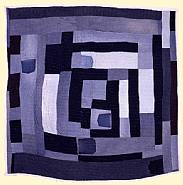
If you’re anywhere near San Francisco between now and the end of the year, get yourself over to the deYoung Museum to see the exhibit of quilts made by the women of Gee’s Bend, Alabama. These quilts just knocked me out. I’ve always thought quilts are beautiful and interesting. I like the combination of utility and art; I like thinking about the community of women making the quilt, sitting around stitching (and also, in this case, singing) together; I like the combination of individuality (each quilt is unique) and the fact that when a woman sits down to quilt, she can use, refer to, or improvise from quilt patterns that stretch back generations. I don’t know how to quilt, but it strikes me that it’s a lot like cooking. Or writing. One of the quilters in the exhibit’s accompanying film says, “That quilt would cook in my mind.” I love that.

Pasta with Shredded Beets

This is delicious, easy to make ahead, and beautiful. Even if the kids think they don’t like beets, they might like the strikingly pink noodles!
1 tbsp butter
2 tbsp olive oil
2 garlic cloves, minced
3 cups (packed) peeled and coarsely grated uncooked beets (about 3 large beets)
1/2 tsp cayenne pepper (more or less to taste)
2 tbsp fresh lemon juice
12 oz tagliatelle, fettucine, or other long pasta
8 oz sour cream (yogurt or goat cheese work, too)
6 tbsp chopped fresh Italian parsley, divided
1/2 cup toasted walnuts, coarsely chopped

Melt butter with oil in large nonstick skillet over medium heat. Add garlic; saute until pale golden, about 1 minute. Add the shredded beets and cayenne; reduce heat to medium-low and saute until beets are just tender, about 12 minutes. Stir in lemon juice. (At this point, you can set the beets aside till you’re ready to boil pasta for dinner)

Cook your pasta in large pot of boiling, salted water, stirring occasionally, until tender.

Drain pasta and return to cooking pot. Stir in sour cream and 4 tbsp of parsley, then the beet mixture. Season to taste with salt and pepper. Transfer pasta to bowls, garnishing with remaining parsley and chopped walnuts.